

Fast shipping across the USA
DISCOVER OUR
Buy High-Quality Wooden Poker Tables
Unlike flimsy plastic folding tables or cold metal alternatives, a quality wood poker table delivers the stability, premium feel, and natural aesthetics that serious home players expect during multi-hour sessions.
Browse Our Premium Wooden Poker Tables Collection:
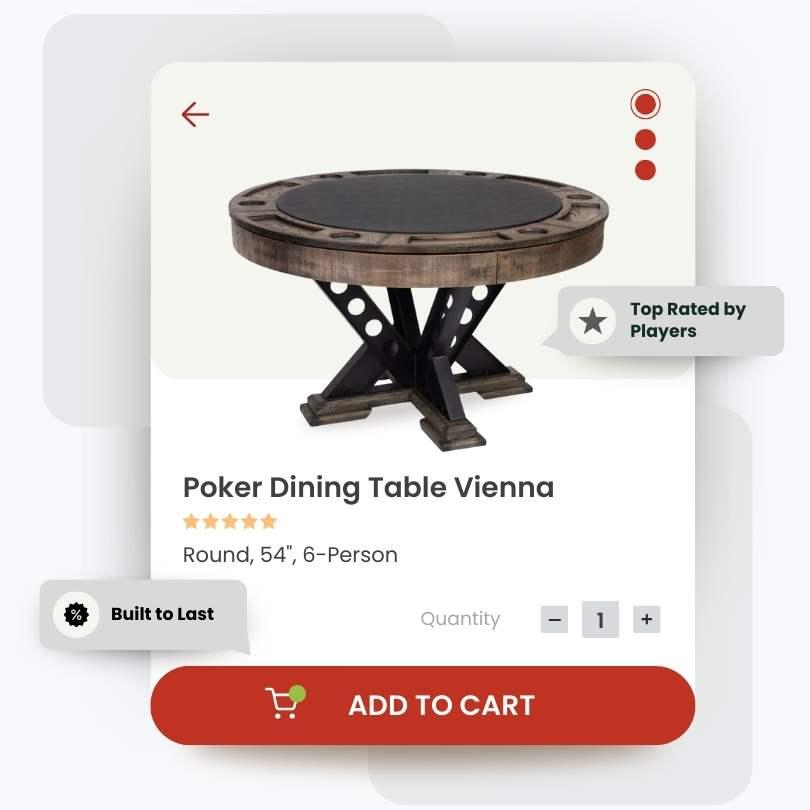


Buy A Wooden Poker Table For Your Game Room
A wood poker table is a purpose-built piece of furniture crafted primarily from timber, designed to accommodate card games like Texas Hold’em with a flat playing surface typically covered in felt and surrounded by padded rails for player comfort. This guide focuses on solid-wood and hardwood veneer poker tables designed for Texas Hold’em, home games, and multi-use family spaces. You’ll discover why wood remains the material of choice for discerning players, explore different table types and configurations, and learn how to select the right wood species, features, and size for your room. Whether you’re setting up a dedicated game room or need a versatile piece that converts from dining table to poker battleground, the benefits of durability, timeless style, and potential for long-term value make wood the smart choice. The scope here centers on home and game-room tables available in North America and Europe in 2024.
Why Choose a Wood Poker Table?
Wood has been the classic poker table material since the earliest card tables appeared in 18th-century Europe. There’s something undeniably satisfying about the sound of chips clicking against a solid wood frame, the way cards glide across felt stretched over a rigid base, and the timeless look that signals to your friends that game night means business.
Stability stands out as the first major advantage. Cheap folding tables wobble, shift, and flex under the weight of elbows and chip stacks. A sturdy wood poker table, especially one with a solid pedestal or reinforced legs, plants itself firmly on your floor and stays put through the most intense all-in moments. The heavier weight—often 150 to 200 pounds for an 84-inch model—actually works in your favor, eliminating the frustrating movement that ruins concentration.
Longevity follows naturally from quality construction. With proper care, a well-built wood poker table can serve your family for 10 to 20 years or more. The durability of hardwoods like oak, maple, and walnut far exceeds what you’ll get from MDF or particle board alternatives that sag and delaminate over time.
Comfort comes from the combination of a padded rail wrapped around a solid wood frame. When you’re deep into a four-hour session, resting your arms on high-density foam covered in vinyl or leather makes all the difference. The rigid wood base beneath the felt surface ensures cards move predictably, improving gameplay versus thin mats laid over whatever table happens to be nearby.
Aesthetics matter when the table occupies a prominent place in your home. Natural wood grain, the ability to stain or finish to match existing furniture, and the inherent warmth of real timber transform a poker table from a utility item into an elegant touch that upgrades your game room, den, or home bar.
Resale Value surprises many buyers. Quality solid-wood poker tables hold their value far better than disposable options. Some become genuine heirloom furniture, passed down through generations. In antique markets, well-preserved Victorian-era wood poker tables have fetched prices ranging from $5,000 to $50,000 depending on craftsmanship and provenance.
Types of Wood Poker Tables
Wood poker tables come in different shapes, sizes, and configurations to suit various rooms and budgets. Understanding the main categories helps you narrow down what works for your space before diving into specific features and finishes.
Oval Texas Hold’em Tables represent the most common style for serious poker nights. A standard 84” x 42” oval seats 8 to 10 players comfortably, with enough elbow room and clear sightlines to the pot. These tables typically feature a dealer position indent, peripheral drink holders, and chip grooves integrated into the rail. If you host regular tournaments or have a group of eight or more, this shape delivers the most authentic experience.
Round and Octagon Tables work beautifully in smaller rooms or for groups that max out at 6 to 8 players. A 48-inch diameter table accommodates up to 6 players, while a 60-inch version handles up to 8. These compact designs often double as family game tables for cards, board games, and puzzles during the week, then transform into the centerpiece for poker night.
Dedicated vs. Convertible Tables marks an important distinction. A dedicated poker table features continuous padded rails, deeper cup holders, and a permanently felted playing surface—ideal for a game room that doesn’t need to serve other purposes. A flip-top or reversible game table converts from a smooth wood dining surface to a felt poker side, offering dual functionality for apartments and multi-use spaces.
Pedestal vs. Folding-Leg Construction affects both aesthetics and practicality. Fixed pedestal-base tables look more permanent and elegant, making them a natural match for dedicated game rooms. Folding-leg wood tables store more easily, sliding against a wall or into a closet between uses—a convenient option for those tight on space.
Modular Gaming Tables represent a newer category featuring recessed vaults and removable toppers. The dining topper covers the play area completely, protecting the felt surface from everyday meals, while the poker configuration includes rails, cup holders, and chip storage. These versatile pieces command premium prices but maximize functionality in homes where space comes at a premium.
Choose your type based on room size, the number of players you typically host (4 to 10+), and whether the table must store away or transform between uses.
Common Woods and Finishes
Not all “wood” poker tables are equal. Some feature solid hardwood throughout, others use hardwood veneer over engineered cores, and budget models may disguise MDF with a wood-look laminate. Understanding the materials helps you shop smarter and avoid vague “wood construction” claims.
Popular Hardwoods for Poker Tables
Red Oak remains one of the most widely available and affordable hardwoods in North America. Its pronounced grain gives tables a bold, traditional appearance that fits naturally in basements and dens.
Hard Maple delivers exceptional durability with a smoother, lighter appearance. It takes stain well, allowing manufacturers to achieve various colors while maintaining the wood’s structural integrity.
Cherry appeals to those seeking warmth and sophistication. The wood naturally deepens in color over years of exposure to light, developing a rich patina that collectors prize.
Walnut sits at the premium end, offering deep chocolate tones and subtle grain. A walnut poker table makes a statement and pairs beautifully with leather chairs and dark finishes.
Solid Wood vs. Veneered Construction
Solid wood construction means the structural components—legs, pedestal, rail frame—consist entirely of hardwood. These tables weigh more, resist damage better, and can be sanded and refinished if scratched. The trade-off is higher cost and increased weight for moving.
Veneered tables apply a thin layer of real hardwood over plywood or MDF cores. Quality veneers look nearly identical to solid wood at a fraction of the price and weight. However, deep scratches can’t be sanded out, and moisture damage may cause delamination over time.
Finish Types
Most poker tables use durable, sealed finishes to resist spills and wear:
-
Clear lacquer provides a hard, protective shell with a slight sheen
-
Satin polyurethane offers excellent durability with a softer, less glossy appearance
-
Oil-based finishes penetrate the wood for a natural look but require more maintenance
When shopping, look for specific wood species and finish descriptions in product listings. Match your poker table’s finish to existing furniture—a dark walnut table pairs naturally with espresso-stained chairs, while a natural oak table complements lighter wood tones throughout your room.
Key Features to Look For
A quality wood frame provides the foundation, but functional poker features matter just as much for an enjoyable game. Here’s what separates a mediocre table from one you’ll enjoy for decades.
Padded Rails
The rail is where your arms rest during play, so thickness and materials directly impact comfort. Look for high-density foam padding at least 3 to 4 inches wide, wrapped in durable vinyl or genuine leather. Premium tables use armrest-style padding that reduces fatigue during sessions stretching four hours or longer. The padded rails should attach securely to the wood frame without gaps or loose sections.
Playing Surface Materials
The felt surface determines card action and durability:
-
Casino-grade speed cloth features a tighter weave that lets cards glide faster, preferred by serious players
-
Standard poker felt offers adequate performance at lower cost but wears faster
-
Water-resistant options help protect against spills, extending the surface’s lifespan
Many tables allow the playing surface to be replaced after heavy use, so check whether the felt attaches via staples (easier DIY replacement) or adhesive (more professional but harder to swap).
Integrated Player Positions
Well-designed tables include features that keep games organized:
-
Cup holders come in stainless steel or plastic, either drop-in style or integrated into a racetrack rail. Stainless versions resist stains better and keep drinks secure during intense hands.
-
Chip trays built into the rail give each player a designated spot for their stack
-
Clear seating positions for 6, 8, or 10 players ensure everyone has adequate space
Base and Leg Design
The base affects both stability and legroom:
-
Single pedestal bases look elegant but check that the foot provides adequate stability
-
Twin pedestal designs distribute weight better on larger oval tables
-
Four-leg construction offers maximum stability and familiar proportions
For dining-conversion models, verify knee clearance won’t feel cramped when used as an everyday table.
Modern Add-Ons
Contemporary tables increasingly include:
-
Built-in USB charging ports for phones and tablets
-
Removable armrest sections for customizable configurations
-
Storage compartments for chips, cards, and dealer buttons
-
LED lighting integrated into rails for ambiance
Prioritize stability (no wobble), comfortable reach to the pot, and ease of cleaning over purely decorative details. The fanciest features mean nothing if the table rocks every time someone goes all-in.
Sizing and Space Planning
Accurate measurements prevent buyer’s remorse. Before falling in love with a particular table, grab a tape measure and understand exactly what fits your room.
Room Clearance Guidelines
Allow at least 3 feet (approximately 90 cm) of open space around all sides of the table. This clearance accommodates chairs pushed back, players standing, and general movement during breaks. For an 84” x 42” oval table, you’ll need a room measuring at least 14 feet by 10 feet minimum—though 16 feet by 12 feet provides much more comfortable flow.
Table Heights
Standard poker tables follow dining table height (around 30 inches), which pairs with conventional chairs and feels familiar. Counter-height tables (around 36 inches) and bar-height options (40 to 43 inches) create a more social, standing-friendly atmosphere but require appropriate seating.
Practical Planning Tips
Before ordering, map the table footprint on your floor with painter’s tape. Sit in the space where chairs would go and ensure the layout feels natural. This simple exercise takes ten minutes but saves significant frustration.
Consider weight carefully—a solid-wood 84-inch table easily exceeds 150 to 200 pounds. If your game room sits in a basement accessible only through narrow staircases, verify the table ships in manageable sections or can navigate tight turns. Some premium tables arrive via freight shipping and require two or more people for assembly.
Dedicated Poker Table vs. Convertible Wood Dining Table
The choice between a permanent poker setup and a table that doubles for daily dining represents one of the biggest decisions you’ll make. Each approach involves trade-offs worth considering carefully.
A dedicated poker table delivers the full experience: continuous padded rails with no interruption, deeper cup holders positioned perfectly for each seat, clearly marked betting areas, optional dealer cutouts, and under-table chip racks for secure storage between hands. These tables look and feel like what you’d find in a professional card room. The drawback? They need a room that can accommodate permanent poker furniture—a space that won’t be needed for family dinners or homework.
A convertible or reversible-top wood table maximizes versatility. One side presents a smooth wood or veneer dining surface suitable for everyday meals, while flipping or removing a topper reveals the felt playing surface underneath. Some designs feature completely separate toppers that lift off and store against a wall when not in use.
Comparing the Two Approaches
Consider a real-life scenario: a city apartment with 800 square feet can’t sacrifice the dining room to poker. A 60-inch round combo table serves family meals five nights per week and poker with friends on Saturday. Meanwhile, a suburban home with a finished basement can dedicate space to a full 84-inch oval dedicated table, leaving the main dining room untouched.
Decide based on frequency of poker nights, household members’ daily needs, and whether the room must function as a kitchen or dining space most days.
Wood Poker Table Styles and Design Ideas
A poker table can define the entire style of a game room or home bar. From rustic lodge aesthetics to contemporary minimalism, the right design creates an atmosphere that makes every game night feel special.
Traditional Styles
Classic poker tables feature turned pedestal bases, carved legs, medium oak or cherry finishes, brass-finished cup holders, and green felt reminiscent of old-world card rooms. These designs evoke the Victorian-era tradition when poker tables first became status symbols among wealthy collectors. A traditional table pairs naturally with leather wingback chairs, dark wood paneling, and warm lighting.
Modern Styles
Contemporary tables embrace clean lines, dark walnut or matte black finishes, integrated LED lighting along the rails, subtle cup holders that don’t interrupt the profile, and neutral felt colors like charcoal, slate, or graphite. The modern approach prioritizes sleek simplicity over ornate detail, fitting seamlessly into minimalist basements and converted lofts.
Rustic and Industrial Hybrids
Reclaimed-look tops with saw-mark textures, matte finishes that show natural imperfections, and metal accent hardware create a bold aesthetic popular in farmhouse-inspired spaces. Pair these tables with distressed leather chairs, exposed brick or concrete, and industrial pendant lighting for maximum effect.
Decorating Tips
Match chairs or benches to the table’s wood tone for a cohesive look. Install a dimmable overhead fixture—a three-light billiard pendant hung 30 to 36 inches above the felt surface provides even illumination without harsh shadows or glare. Add wall storage for chips, card decks, and accessories to keep the table surface clear when not in use.
Care, Maintenance, and Longevity
Proper care keeps a wood poker table looking new for a decade or more. The investment you make in maintenance pays dividends in durability and continued enjoyment.
Everyday Cleaning
Wipe wood surfaces with a soft, dry cloth or one slightly dampened with water. Avoid harsh chemicals, abrasive sponges, and furniture polishes containing silicone, which can build up and cloud the finish. For stubborn spots on sealed wood, a mild dish soap diluted in water works safely when wiped dry immediately.
Playing Surface Maintenance
The felt surface requires gentle attention:
-
Brush crumbs and debris away with a soft-bristled brush after each session
-
Spot-clean spills promptly using a damp cloth and blotting (never rubbing)
-
Vacuum lightly with a brush attachment monthly to remove dust embedded in the fabric
-
Keep food and beverages in designated cup holders rather than directly on the felt
Spill Prevention
Using the drink holders keeps beverages secure and away from the playing surface. For added protection, some tables include removable toppers that shield both wood and felt during casual use. Encourage players to use coasters, especially for sweating glasses on humid nights.
Seasonal Considerations
Solid wood responds to humidity changes. In dry winter months, wood can crack or shrink; in humid summers, it may expand slightly. Running a dehumidifier or humidifier to maintain consistent indoor humidity (ideally 40 to 50 percent) protects against warping and cracking. Position the table away from direct heating vents and air conditioning outputs.
Long-Term Care
After years of heavy use, felt surfaces wear thin and cards stop gliding smoothly. Professional re-felting costs approximately $500 to $800 depending on table size and material choice. Tighten all hardware annually—pedestal bolts, leg screws, and cup holder mounts can loosen over time. If scratches accumulate on wood surfaces, light sanding and refinishing restore the original beauty, though this may cost $500 to $2,000 for professional work.
Budget, Shipping, and Assembly Considerations
Wood poker tables span a wide price range in 2024. Setting realistic expectations before shopping prevents sticker shock and helps you allocate funds appropriately across table, chairs, and accessories.
Typical Price Tiers
Entry-level tables serve casual players who host monthly games and need easy storage. Mid-range solid hardwood tables suit dedicated game rooms and serious home players. Premium and custom builds cater to collectors, tournament hosts, and those seeking a true centerpiece.
Shipping Methods
Smaller folding models ship via standard parcel carriers in manageable boxes. Larger solid-wood tables often require LTL freight shipping with curbside delivery—meaning a truck drops the crated table at your driveway, and you’re responsible for moving it inside.
Before purchasing, check:
-
Total weight of each shipping carton
-
Whether white-glove delivery (inside placement and assembly) is available
-
Required doorway and stairway clearances for delivery
Assembly Expectations
Most wood poker tables require some assembly. Common steps include attaching pedestal or legs, installing cup holder hardware, and aligning toppers or rails. Budget 60 to 90 minutes and recruit a helper—lifting heavy components solo risks injury and damage.
Total Project Budget
Factor in more than just the table price:
-
Chairs (8 matching poker chairs: $400-$1,200)
-
Chips, cards, and dealer accessories: $100-$300
-
Protective cover: $50-$150
-
Overhead lighting: $200-$500
A realistic total investment for a quality setup runs 30 to 50 percent higher than the table alone.
Accessories to Complement a Wood Poker Table
The right accessories protect your investment and enhance every poker night. Think of these items as completing the experience rather than optional extras.
Protection and Organization
-
Fitted table covers shield felt from dust, pets, and accidental spills between sessions
-
Under-rail chip trays give each player organized storage during play
-
Chip racks and card cases keep accessories tidy when stored away
Gameplay Essentials
Quality accessories elevate casual games toward a casino feel:
-
Clay or ceramic chips provide satisfying weight and sound compared to flimsy plastic
-
Plastic-coated playing cards resist bending and last significantly longer
-
Dealer shoes for multi-deck games like blackjack keep deals organized
-
Automatic card shufflers speed up dealing between hands
Seating Considerations
Match chair height to table height—standard 30-inch tables pair with 17 to 18-inch seat heights. Padded poker chairs on casters allow easy movement around the table without scratching floors. Wood dining chairs complement the table aesthetically, though players may prefer cushioned options for extended sessions.
Lighting and Ambiance
A dimmable overhead fixture with warm-temperature bulbs (2700K to 3000K) creates an inviting atmosphere. Pendant lights or billiard-style fixtures hung at appropriate height illuminate the felt evenly without casting shadows or creating glare that makes cards hard to read.
Investing modestly in accessories significantly extends the life of your wood table and improves every game night. A $50 cover and $100 chip set make a noticeable difference in both protection and playing experience.
How to Choose the Best Wood Poker Table for Your Home
With all the information covered, choosing the right table comes down to a systematic approach. Use this checklist to move forward confidently toward a purchase you’ll enjoy for years.
Step-by-Step Selection Process
-
Measure your room and determine maximum table size and shape based on available space and clearance requirements
-
Decide dedicated vs. convertible based on how often you’ll host games and whether the room serves other daily functions
-
Select wood species and finish that complement existing furniture and match your aesthetic preferences
-
Prioritize core features including rail comfort, cup holder quality, playing surface material, and base stability
-
Set a realistic budget that includes not just the table but chairs, accessories, and potential shipping costs
Comparing Models
Once you’ve narrowed options to 2 or 3 specific models, create a simple comparison noting differences in hardwood type, warranty length, included features, and total delivered price. Read user reviews that mention stability over time, how actual color compares to product photos, and long-term wear patterns rather than focusing only on initial appearance.
Making the Decision
A thoughtfully chosen wood poker table serves as both the centerpiece for exciting game nights with friends and family and a lasting piece of home furniture that may well outlast the house you put it in. The right table fits your room, matches your style, delivers the features that matter for actual gameplay, and stays within a budget that lets you complete the setup with proper chairs and accessories.
Take your time, measure twice, and invest in quality that rewards you every time the cards hit the felt.
REVIEWS
Trusted by Poker Players
No complaints, amazing table!
Great quality, very sturdy and I absolutely love showing it off to my friends, it makes them want to come over and play.
Haf
Excellent poker table! This product is outstanding--delivered in great condition and very quickly. Lots of room for 6 people playing, and very . Converts easily and fast from poker to dining
Dominic
Exactly like on the photos.
Converts easily, handy compartments for storage.
John
Good quality and service
GREAT quality poker table for the price!
Lisa Barney
I give them my highest recommendation!
A pleasurable experience working with a company focused on customer service.
Jean O.
Five stars
Great table, very happy with the purchase.
Mark
High quality.
Easy to assemble, stylish.
Ryan
Great table.
Table is solidly built and looks great. Assembly was easy as instructions were well written (many are not) and all parts and fasteners were properly machined to fit. Overall couldn’t be happier with this table.
S. Kitching
op quality, great customer service
This is a quality product through and through, felt, rail, cup drawer/holders, sturdy and stable, seats six very comfortably.
James
Americana Poker Tables
We aim to help you create unforgettable experiences without sacrificing the elegance of your home, offering a practical solution that transforms any space into the perfect setting for both dining and gaming
Links
Follow Us
Payment Methods

Buy Poker Tables Online