

BUYING GUIDES
The Ultimate Poker Tables with Chairs Shopping Guide for 2026: Expert Picks & Buying Advice
A quality poker table with matching chairs can turn an average game night into something you’ll actually remember. Whether you’re setting up a game room or just want to host better tournaments, the right furniture makes a real difference.
The good news? In 2026, there are more options than ever—everything from foldable tables for cramped apartments to professional-grade setups with padded rails and built-in cup holders.
February 22, 2026
By James King
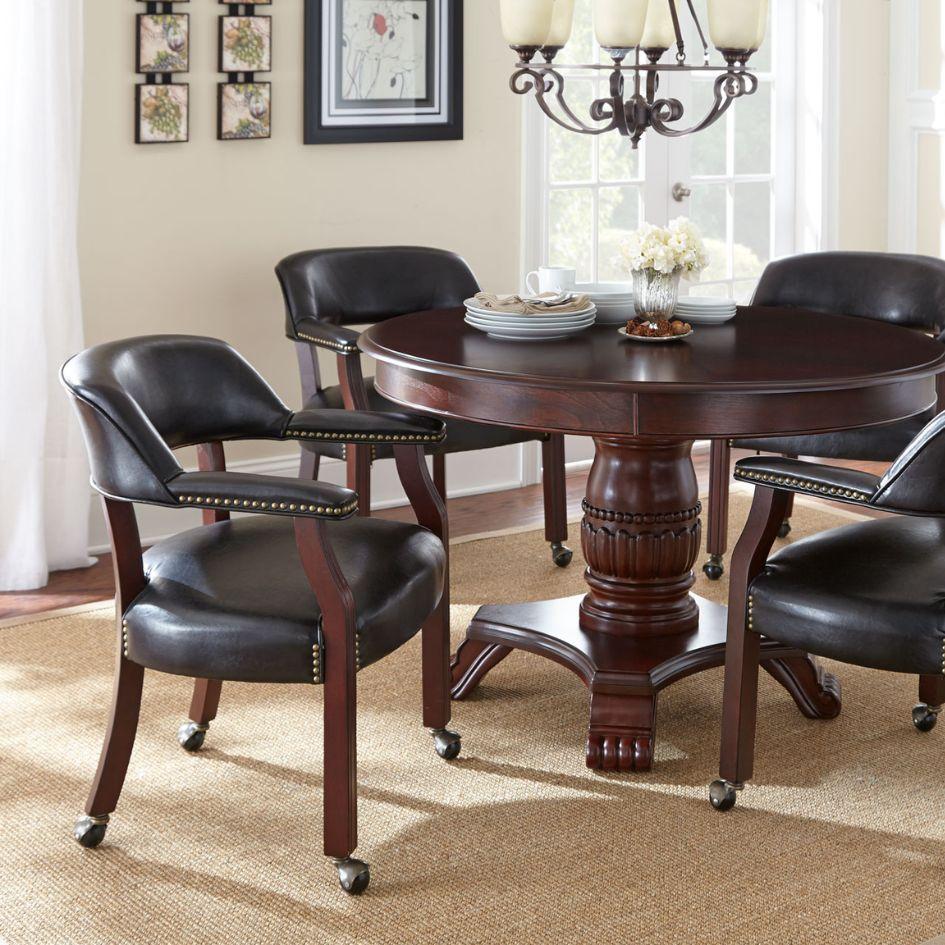
The best poker table and chair combination balances comfort, durability, and the right size for your space. Most sets accommodate 8-10 players and feature padded armrests, sturdy construction, and chairs that actually support you through those marathon sessions.
Most quality tables now fold for easy storage and include practical perks like stainless steel cup holders and chip trays. Prices are all over the place, but you don’t have to spend a fortune to get something solid.
This guide covers what you need to know before buying. You’ll get the lowdown on table shapes and sizes, which features matter, and how to pick chairs that keep everyone comfy—even when the game drags on.
Key Takeaways
-
Poker tables come in all shapes and sizes, but 8-player models are the top pick for most home games.
-
Look for tables with padded rails, cup holders, quality felt, and chairs built for hours of play.
-
Think about your space, storage needs, and whether you want a foldable or permanent table before you buy.
Choosing the Best Poker Tables with Chairs in 2026
A complete poker table and chairs set can totally transform your gaming space. Comfort matters, especially when you’re playing for hours.
The right combo balances quality, space, and budget while still matching your playing style.
I've hosted hundreds of 8-person games over the years, on tables ranging from cheap folding disasters to custom masterpieces. Here's everything you need to know about choosing an 8-person table that creates the perfect balance between serious poker and social gaming.
Why Invest in a Dedicated Poker Table and Chairs Set
A dedicated poker table with chairs brings a professional vibe to your home games. You get perks like padded armrests, built-in cup holders, and chip trays—stuff you won’t find on a regular dining table.
Poker chairs line up at the right height with the table, saving your back during those three-to-five hour games. No more awkward slouching or shifting in your seat.
Most poker tables come with felt surfaces that let cards glide and keep chips in place. The padded rail is a relief for your arms between hands.
Buying a matched set means you won’t have to hunt for chairs that actually fit your table. Standard poker tables sit at 30 inches high, and the right chairs are built for that.
Key Benefits Compared to Regular Tables
Regular dining tables just don’t cut it for poker. They lack the water-resistant surfaces that protect against spilled drinks—something you’ll appreciate the first time someone knocks over a beer.
Storage and convenience set dedicated poker tables apart. Many fold up for storage or convert to dining tables when you’re not playing. That’s a lifesaver if you’re tight on space.
Poker table chairs usually come with:
-
Swivel bases for getting in and out easily
-
Casters or wheels for rolling around
-
Padded seats for long sessions
-
Armrests at just the right height
Poker tables keep the playing surface level and steady. Dining tables? They might wobble if someone leans too hard, which can mess up chip stacks and cards.
Popular Poker Table and Chair Combos
Full-sized rectangular sets fit 8-10 players and measure around 92-104 inches long. These are perfect for bigger home games with a regular crew.
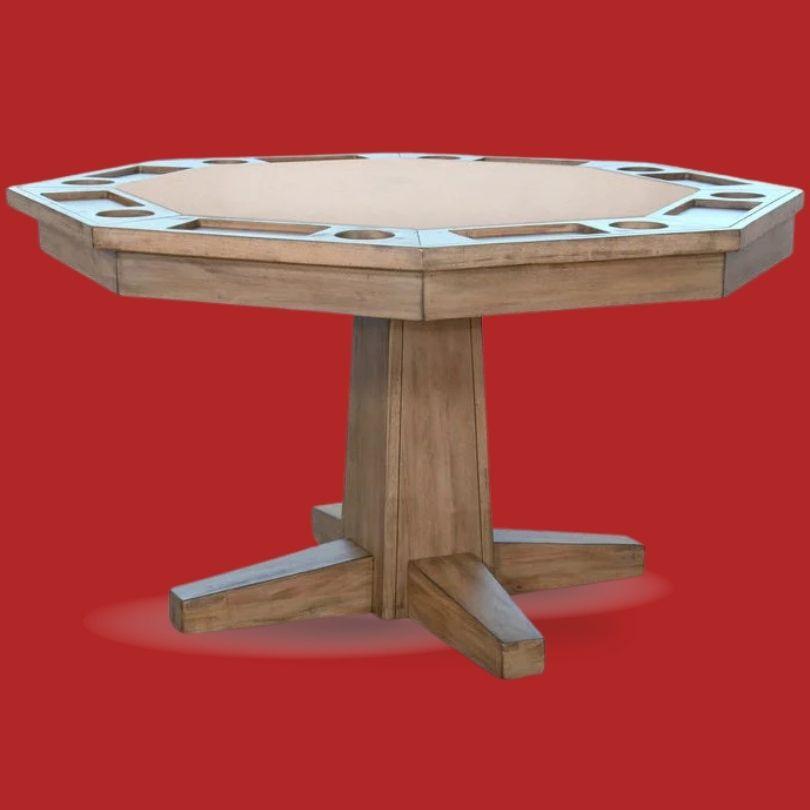
Octagonal tables seat 4-8 players and squeeze into smaller spaces. The equal distance for everyone feels fair and keeps things friendly.
Round tables with pedestals give you the most leg room, but usually max out at 6 players. The single center support means no annoying corner legs.
Poker tables come in three main price ranges. Budget sets ($200-$500) use synthetic materials and basic chairs. Mid-range options ($500-$1,200) feel sturdier and more comfortable. Premium tables ($1,200+) bring out the solid wood, leather chairs, and that “wow” factor.
Folding table and chair combos are great for occasional players. They stash away easily, but you do lose a bit of comfort and stability compared to the real-deal permanent setups.
Types of Poker Tables: Shapes, Sizes, and Formats
Poker tables come in all sorts of shapes and builds to match your space and how you play. Round tables are great for smaller groups, oval tables work for bigger games, and octagon tables sit somewhere in the middle.
You’ll also want to decide between permanent and portable tables, and whether you want one that doubles as a dining table.
Round, Oval, and Octagon Poker Tables
Round poker tables usually measure 48 to 65 inches across and seat 4 to 8 players. Everyone’s the same distance from the center, which makes dealing and reaching the pot a breeze.
These tables fit nicely in smaller rooms and feel more social—no one’s stuck at the “head” of the table.
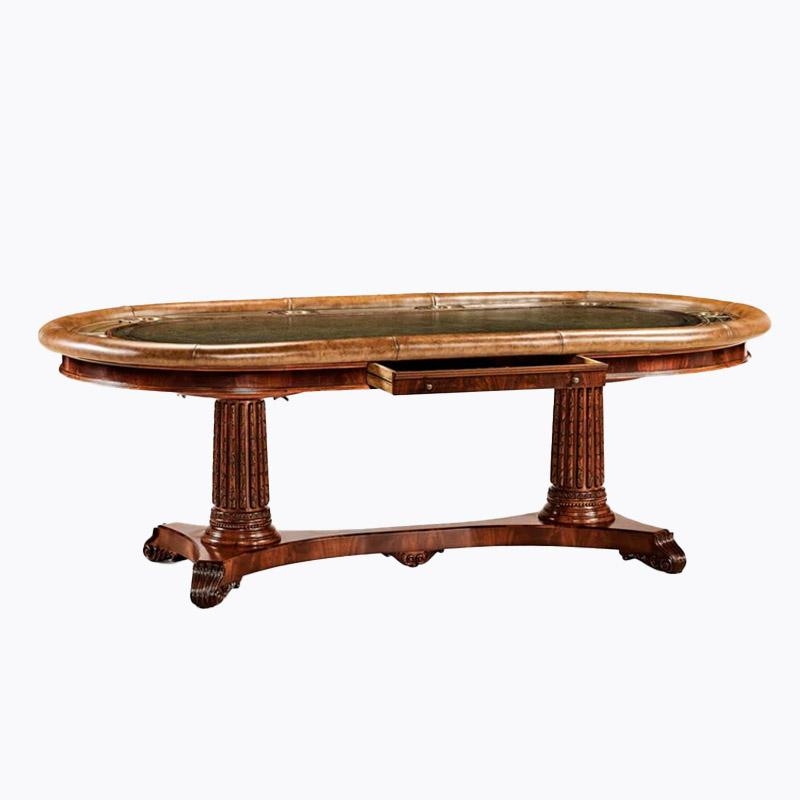
Oval poker tables run 72 to 96 inches long and 44 to 48 inches wide. An 8-player poker table is often about 84 inches, while 10-player versions stretch to 96 inches. The oval shape gives you clear dealer and player spots, just like at a casino.
Octagon poker tables seat 4 to 6 players and measure about 48 to 54 inches across. The eight sides mean everyone has a spot, but you still keep things pretty close and friendly.
Foldable vs Fixed Poker Tables
Folding poker tables use legs that collapse, so you can stash them away when you’re done. Most weigh 30 to 60 pounds and are easy for one person to move.
You’ll find round and octagon folding tables, usually seating 4 to 8 players. The playing surface is generally padded felt over particleboard or MDF.
Fixed poker tables stay put and usually weigh 100 to 200 pounds or more. These use thicker materials like birch plywood and come with cup holders, chip trays, and padded armrests.
Foldable poker tables work better if your game room doubles as something else.
Poker Dining Tables and Convertible Models
Convertible poker tables switch between dining and gaming with a removable top. The poker surface hides under a regular tabletop that lifts off when it’s time to play.
A poker dining table usually seats 6 to 8 for meals—and the same for cards. If you need furniture that does double duty, these are worth a look.
The dining top usually sits flush with the rail, so table height stays around 30 inches. Most convertible tables are oval or round.
Quality matters here, since you’ll use the table for both eating and playing. Go for solid wood and a secure attachment for the top.
Some brands also make outdoor poker tables with weather-resistant materials like aluminum frames and marine-grade vinyl. These often fold up for storage, too.
Essential Features to Look for in Poker Tables and Chairs
The best poker table and chairs combine comfort, durability, and features that make your game nights better. Keep an eye on surface materials, built-in storage, portability, and design that fits your style.
Table Surface Materials and Padding
The surface of your poker table really matters for gameplay and player comfort. Look for speed cloth or suited speed cloth—cards glide easily, and it holds up better than regular felt.
Padded rails make a big difference during long sessions. Good tables have armrests with at least an inch of foam, covered in vinyl or leather. The padding should be firm but not rock-hard—nobody wants sore elbows.
The base material counts, too. MDF tables are stable and affordable. Premium tables use solid hardwood frames that hold up for years.
Integrated Cup Holders and Chip Trays
Built-in cup holders are a must if you want to avoid spills. Steel cup holders last the longest and handle hot or cold drinks without cracking. Stainless steel versions resist rust and always look sharp.
Most good tables have eight cup holders for a full table. They should be deep enough to actually hold your drink and close enough so you don’t have to reach.
Chip trays keep the table tidy. These recessed areas sit in front of each player and hold chips during play. Look for trays wide and deep enough for multiple chip stacks. Tables with individual chip storage help keep everything in place—even when the action gets wild.
Folding Legs and Portability
Folding legs turn a big table into something you can hide in a closet. If you don’t have a dedicated game room, this is a game-changer.
The folding mechanism should lock tight—nobody wants a table collapsing mid-hand. Metal legs give more stability than plastic.
Some tables fold in half, others use a three-fold design. The lighter ones (25-40 pounds) are easy for one person to move; heavier ones might need two people but feel sturdier.
Carrying handles or storage bags are a nice touch if you plan to move your table around a lot.
LED, Design, and Functional Upgrades
LED poker tables add a cool vibe with lights around the rail or under the surface. You can change colors or set the mood—maybe a little over the top, but hey, it’s fun.
Pick a design that fits your space. Traditional tables use wood finishes like cherry or walnut. Modern ones might go all-black with chrome accents.
Some tables have removable tops that convert the poker surface to a dining table. Others offer mats you can swap out for different games. Chairs with caster wheels make it easy to move around the table. Adjustable height options on tables and chairs help everyone get comfortable.
Choosing Poker Table Chairs: Styles and Comfort Considerations
The right poker table chairs really do make a difference—nobody wants to stand up stiff after a long session. Different designs offer unique perks for comfort and movement, while materials and padding decide how well your chairs hold up.
Popular Chair Styles: Bucket, Armchair, and Stool
Bucket chairs have curved backs and raised sides that kind of hug you. They give good side support and keep you centered at the table. If you like a secure, wrapped-in feeling, these are great.
Armchair-style poker chairs come with padded armrests and usually have a classic look. The arms give you a spot to rest and make it easier to stand up after hours of play. Most have casters so you can roll in and out without scraping the floor.
Poker stools are a compact option for small spaces. They’re backless or low-back and tuck under the table easily. You do lose some support, though—after a few hours, you’ll probably wish you had a backrest.
Style Comparison:
-
Bucket chairs: Best side support, modern vibe
-
Armchairs: Most comfortable for long games, classic style
-
Stools: Space-saving, laid-back feel
Ergonomics, Support, and Padding
Your lower back needs solid support during those marathon poker nights. Hunt for chairs with backrests that actually match the curve of your spine.
The seat should slope down just a bit at the front, so you don’t get that annoying pressure on your thighs.
Padding isn’t just about comfort—thick, high-density foam keeps its shape way longer than cheap stuff that flattens out after a few months. Shoot for at least 2-3 inches of quality padding on both the seat and backrest.
Seat height makes a surprising difference. You want your feet flat on the floor, knees at about 90 degrees.
Adjustable-height chairs let everyone find their sweet spot, which is a lifesaver if your poker table sits higher or lower than a regular dining table.
Upholstery Materials and Durability
Vinyl rules the poker chair world because it’s easy to wipe clean and shrugs off spills. PU leather gives you a similar vibe for less cash, but honestly, it might start cracking or peeling after a couple of years if you use it a lot.
Genuine leather? It’ll outlast the others, but you’ll pay for it.
Fabric upholstery breathes better, which is a relief in the summer. The downside: fabric soaks up spills and needs more cleaning.
If you go with fabric, treat it with a stain protector right away.
Frame construction decides how long your chairs stick around. Metal frames with powder coating don’t rust and hold more weight than wood.
Always check the weight capacity—good poker chairs should handle at least 250 pounds. Reinforced joints and cross-bracing help keep wobble at bay.
Top Poker Table Accessories That Complete Your Setup
Once you’ve got a great poker table and comfy chairs, the right accessories really pull everything together. Clay poker chips and an automatic shuffler are pretty much non-negotiable if you want smooth, casino-like play.
Poker Chip Sets: Quality and Capacity
Your poker chip set changes the whole feel of your game. Clay chips are the real deal, usually 8.5 to 10 grams each, giving you that satisfying heft and easy stacking you just don’t get with plastic.
For most home games, 300 to 500 chips cover you for nearly any player count or betting style. If you’ve got 6 to 8 players, a 500-chip set with multiple denominations is the way to go.
Go for at least four colors to keep values clear. The classics: white for $1, red for $5, green for $25, blue for $50, and black for $100.
Make sure chip values are printed or molded right into the design. It saves a lot of confusion during betting, especially for newer players.
A chip tray keeps everything organized and within reach, so you don’t have to pause the game to hunt for the right chip.
Automated Card Shufflers and Dealer Buttons
An automatic card shuffler keeps the game moving and makes sure the shuffle’s fair every time. Models that handle multiple decks are best if you play a lot or host tournaments.
Quiet operation is a must—nobody wants a noisy gadget breaking the mood.
The dealer button marks who’s dealing and sets the betting order, especially for Texas Hold’em or Omaha. Pick one big enough for everyone to see.
Ceramic or metal buttons just feel better than plastic and look sharp on the table.
Most good dealer buttons are about 2 inches across with easy-to-read “DEALER” text. Some even have built-in timers for managing tournament blinds.
Cut cards are a simple add-on that keeps the bottom card hidden during the deal, protecting the integrity of the game.
Buying Guide: Key Factors Before Purchasing in 2026
Picking the right poker table and chairs takes some planning—think about your space, budget, and how much maintenance you’re willing to deal with. Your setup should fit your room size, handle your usual player count, and make sense for your budget, both now and down the road.
Room Size, Table Dimensions, and Player Capacity
Measure your available space before you even look at tables. A standard 84" x 42" oval table needs at least 12 by 10 feet of clear floor space once you add chairs and leave room to move.
That’s enough for players to push their chairs back and stand up without bumping into each other.
Player capacity is about more than just seat numbers. Give each player 22-24 inches of elbow room so nobody’s squished.
Those “seats 10” labels can be misleading—sometimes they just mean everyone’s fighting for space and chips get knocked over.
Think about your usual games. Do you run mixed games with lots of chip colors? Do people bring drinks or tablets to the table?
These details help you pick the right table shape:
-
Oval tables give everyone a good view and make dealing easier, but they need more length.
-
Round tables keep things social and fair, but you lose some rail storage.
-
Rectangular tables squeeze into tighter rooms but leave awkward dead spots at the ends.
Try marking the table’s footprint with painter’s tape and sitting around it with chairs for a while. You’ll quickly notice any space issues.
Maintenance, Cleaning, and Long-Term Value
Felt needs regular care if you want it to last. Don’t vacuum the surface—instead, use a lint roller or a soft brush to pick up dust and crumbs.
Rotate the felt every few months to spread out wear, especially if you play often.
Most good tables need new felt every 3-5 years if you play weekly. Watch for pilling, slow chip glide, or weird discoloration where hands always rest.
Budget $150-300 for professional felt replacement when the time comes.
Rail padding flattens eventually. Memory foam with a density of 2.2-2.6 pounds per cubic foot holds up best.
Anything lower than 1.8 PCF compresses fast and can leave your wrists sore after long games.
Cup holders and chip trays need a checkup now and then. Look for cracks in plastic parts and tighten up any loose screws.
Wipe up spills right away so you don’t end up with stains or moisture damage.
Frequently Asked Questions
Picking the right poker table and chairs means thinking about materials, sizing, comfort, and what actually looks good in your space.
What are the top-rated poker table and chair sets in 2026?
The Barrington Charleston 10 Player Folding Poker Table is still a fan favorite. It’s got a black velvet playing surface, padded rails, and built-in cup holders. The table arrives pre-assembled and folds up for easy storage.
The POKERPAL 8 Player Poker Table comes with two game mats—one for poker, one for blackjack. The cup holders are big enough for wine or whiskey glasses, which is a nice touch. No assembly needed, just fold out the legs.
ZivPlay’s Poker Table fits up to 10 players and sports a sleek black velvet surface. Padded rails and built-in cup holders round out the package. It unfolds quickly and stows away without fuss.
Most top-rated sets in 2026 lean into portability and convenience, blending casino features with real-world home use.
How do different materials affect the durability and feel of poker tables?
Felt is the classic for a reason—it lets cards slide smoothly and keeps the table quiet. Casino-grade felt ups the professional vibe.
Some tables use waterproof surfaces to guard against spills. They’re easier to clean, but don’t always feel as authentic.
Black velvet looks great but tends to show wear marks after a while.
Table frames matter, too. Wood frames look traditional and feel sturdy.
Metal frames are lighter and strong, which is handy if you move your table often.
PVC laminated plywood is common for aprons—it fights off scratches and moisture. Steel legs make the table rock-solid and handle heavy loads.
Padding under the playing surface gives you comfort for longer games and helps protect the frame from dings.
What features should be considered when looking for comfortable chairs for long poker sessions?
Padded armrests are a lifesaver for long games. They let you rest your arms between hands, and tables with built-in padded rails can do the trick if your chairs don’t have them.
Seat height should keep you level with the table—standard dining height usually works, but adjustable chairs are even better.
Back support is crucial for multi-hour games. Chairs with lumbar support help prevent back pain and fatigue.
Cushioned seats make a huge difference when you’re sitting for hours.
Breathable fabrics help keep you cool, especially when the action gets intense. Leather and vinyl are easy to clean but can get sweaty. Mesh or fabric chairs breathe better.
Make sure the armrests fit under the table edge, so you can pull up close. Some poker tables work best with armless chairs.
What size of poker table is ideal for both casual play and tournament-style games?
An 8-player poker table hits the sweet spot for most home games. It’s cozy but not cramped, usually around 71 inches long.
If you’re running bigger games or tournaments, a 10-player table gives everyone more space. You’ll need at least a 12 by 8.5-foot room for comfort.
The playing surface should have plenty of room for community cards, pots, and everyone’s chip stacks.
Tables with chip trays keep things tidy, and built-in cup holders stop drinks from hogging the playing area.
Folding tables are a solid choice if your group size changes often. Use them for big tournaments, then stash them away for smaller games.
Standard table height—28 to 30 inches—works for both casual and serious play.
Always check your room size before settling on a table. Players need space to move their chairs back without bumping into walls. Leave at least 3 feet of clearance on all sides.
How do I ensure the stability and longevity of a poker table and chair set?
-
Sturdy legs make all the difference. Metal legs with solid locking mechanisms offer the best support.
-
Steel legs beat aluminum or plastic for strength.
-
Check the joints and connections—wobbly tables are a pain. Folding tables should have reliable locks that hold the legs steady.
-
Thick felt lasts longer than thin stuff, and reinforced edges stop fraying.
-
Clean your table and chairs regularly. Use a lint roller or soft brush on the felt, and wipe up spills with a damp cloth—don’t soak the surface.
-
Store folding tables in a dry, level spot away from extreme temperatures to prevent warping.
-
Pay attention to weight limits. Make sure the table can handle chips, cards, and the occasional player leaning in. Chairs should support a range of body types comfortably.
What are the latest trends in poker table designs for home game rooms?
Interchangeable game mats are catching on in 2026. Tables now often include several playing surfaces for poker, blackjack, or whatever you’re in the mood for.
This versatility really helps you get more out of your game room. Who doesn’t want to make the most of their space?
Casino-style touches have found their way into homes. Black velvet surfaces look sharp and a bit luxurious.
LED lighting along the table edges? It’s not just for show—it actually sets a pretty great mood for late-night games.
Designers are thinking about storage and portability, too. Pre-assembled folding tables snap open in seconds, no screwdriver required.
Lighter materials mean you can move your table between rooms without breaking your back.
Cup holders have gotten bigger, finally. Deep holders now fit wine glasses and whiskey tumblers, not just cans or bottles.
A few tables even have USB charging ports for your phone or tablet. That’s one of those little things you didn’t know you needed until you do.
Neutral color schemes are everywhere. Black, gray, and dark green surfaces blend in with most room setups, and they hide scuffs or crumbs better than lighter shades.
Removable components make cleaning way less of a hassle. You can swap out the felt surface when it wears down, so you don’t have to replace the whole table.
EXPLORE OUR COLLECTIONS
Discover
All Poker Tables
Poker Tables
By Number Of Players
Poker Tables
By Shape
CONTINUE READING
Check Out Our Most Popular Content

ELEVATE YOUR GAME NIGHTS
Poker Tables For Every Home
Browse convertible poker dining tables, or add matching chairs
Americana Poker Tables
We aim to help you create unforgettable experiences without sacrificing the elegance of your home, offering a practical solution that transforms any space into the perfect setting for both dining and gaming
Links
Follow Us
Payment Methods

Buy Poker Tables Online